




ams OSRAM Home/Building Automation

ams OSRAM Home/Building Automation Solutions encompass reliable smart home and building automation solutions. The digitization of buildings is continuously progressing, leading to increased comfort and safety, more security, and less energy consumption. Combined lighting and sensing technologies are key enablers for a broad range of automated functions, like more differentiated smoke detection, smart keyless access, advanced human-centric lighting (HCL), UV-C treatment, and condition monitoring or predictive maintenance for fail-safe operation of critical infrastructures and equipment.
Videos
Reliable Smoke/Flame Detection
Emerging optical technology for smoke alarms detects fire faster and more reliably - which helps to save lives and avoids false alarms binding precious resources to the wrong spot. The combination of a multi-spectral sensor and white LED emitter recognizes the unique spectral signatures of different types of smoke. The technical concept for designing next-generation smoke detectors has been developed and tested by ams OSRAM to enable faster and more precise detection of hazardous situations caused by smoke or fire than other smoke detectors on the market today. It also has the unique ability to distinguish between different types of fire and smoke, leading to more accurate alarms and fewer alarm artifacts due to, for example, dust. With the ams OSRAM technology, the emergency signal to first responders can now include information about whether the flame is from wood, plastic, oil, or some other material so that emergency responders can prepare the correct safety and extinguisher resources en route.
Secure Access Control
In the past, advanced sensing capabilities have been used to enable biometric access solutions. Most prominent are biometric face scans, iris scans, or finger-/hand-print scans. Recent solutions around unique cardiac patterns or palm vein scans being evaluated are emerging. Let’s take a closer look at the state-of-the-art solutions.
Biometric face scans typically capture the following features, which are then compared for size, thickness, placement, shape, or contour: cheekbones, eyes, nose, mouth, lips, chin/jawline, forehead/scalp, and ears. Critical infrastructure requires a 100% biometric match, whereas, for most commercial systems, an 80% to 90% match is sufficient. Protection against spoofing or faking (e.g., putting a photo in front of the scanner instead of a real person) requires true 3D face data capturing. To do so, dual-camera stereovision or single-camera structured light scanning (where a single camera measures the shift of defined dot pattern projection) is used.
Another biometric scanning approach uses iris scans. Each person has a unique iris in texture, size, and color. A combination of near-infrared or visible light illuminators plus a digital camera is at the core of a biometric eye scanning system. Typical distances between the iris and the scanning system are ~8cm to 40cm. Iris scanning is among the most secure scanning technologies as it uses up to 240x reference points to decide on a match (in comparison, finger scans typically rely on ~60x reference points for a match).
Finally, finger-/hand-print readers scan the tiny friction ridges on the ends of fingers and thumbs, which are unique for each person. The scan can be performed optically (fast but sensitive to dirt), capacitively (fast but sensitive to wet/dirty hands), or using ultrasonic means (even 3D scan, but slow). Irrespective of the scanning method, a map of the friction ridges is created and evaluated during access scanning. Optical scans are typically about 512x512 pixels for a ~2.5cm2 image at ~500dpi and 256x grey shade levels. Live finger detection algorithms are deployed to detect fake fingers, which follow the same methods as those known for vital sign monitoring: heart rate, blood oxygen, etc.
Human-Centric Lighting
Human-centric lighting is the discipline of creating lighting environments similar to which our bodily functions are used to from natural daylight. It enhances human performance, comfort, health, and well-being.
The most obvious effect of light on humans is vision. It enables us to identify brightness, shapes, colors, and images and perceive information and contrast. But there is much more to it: light also impacts our biology. It affects our hormones, alertness, attention, and fatigue and also determines our body clock and circadian rhythm.
Photosensitive retinal ganglion cells (ipRCGs) inside the retina form a neural pathway to the brain’s hypothalamus region. Our brain regulates the circadian (circa-daily) rhythm of the body following the natural day/night cycle. Melanopic light is the part of the light spectrum with the highest alertness potential, with a peak in the ~470nm to 490nm spectrum range. It triggers a photosensitive protein, so-called melanopsin, inside the ipRGCs. In a complex process, melanopsin suppresses the sleep-inducing hormone melatonin during the day and gradually increases melatonin production as light fades into night.
Clinical studies have revealed that red light in the mid-600nm and near-infrared spectrum at ~850nm helps to protect against age-related vision loss - so-called macular degeneration - without any observed adverse side effects. The stimulation of adenosine triphosphate (ATP) production by the mitochondria within the eyes’ cells counters normal cell degradation. It reduces visual decline, edema, hemorrhaging, and risks of eye inflammation.
Finally, light (especially in the UV spectrum) influences Vitamin D production, endorphin release, and direct immune suppression within the human body via the skin. Human-centric lighting considers these effects and provides a holistic approach to lighting for humans. It balances humans' visual, emotional, and biological needs within lighting applications.
Featured Products
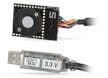
ams OSRAM AS7341 11-Channel Spectral Sensor Evaluation Kit
A platform to evaluate the AS7341 11-channel spectral sensor.
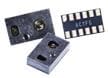
ams OSRAM TMF8801 1D Time-of-Flight Distance Sensors
Time-of-Flight sensors with 945nm integrated IR VCSEL in a 2.2mm x 3.6mm optical module (1.8V, I2C).
ams OSRAM AS6221 & AS6221T digitala temperaturgivare
Består av en Si-bandgap-temperatursensor, en ADC och en digital signalprocessor.

ams OSRAM OSLON® UV 3535 LEDs
A compact UV-C LED that is part of the OSLON UV series.

ams OSRAM AS7331 3-Channel UV-A/B/C Spectral Sensor ICs
Low-power, low-noise integrated UV sensors with three separate UVA, UVB, and UVC channels.
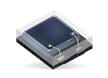
ams OSRAM SFH 2704 CHIPLED® Silicon PIN Photodiode
Designed for use in health monitoring applications like heart rate monitoring and pulse oximetry.
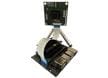
ams OSRAM Mira Optical Sensor Evaluation Kits
Platform based on Raspberry Pi 4B that evaluates the Mira220 and Mira050 image sensors.

ams OSRAM SFH 4259B Power TOPLED™ Lens
Offers superior 88mW/sr radiant intensity employing IR:6 thin-film chip technology for IREDs.

ams OSRAM SFH 4258B Power TOPLED™ Lens
Offers exceptional 202mW/sr radiant intensity employing IR:6 thin-film chip technology for IREDs.

ams OSRAM SFH 4249B Power TOPLED™ Lens
Offers excellent 83mW/sr radiant intensity utilizing IR:6 thin-film chip technology for IREDs.

ams OSRAM SFH 4248B Power TOPLED™ Lens
Offers exceptional 189mW/sr radiant intensity utilizing IR:6 thin-film chip technology for IREDs.